Copy of Knowledge Database - Monographs - Backup - 02 December 2025
Essential Oils Monographs:
Approaching the ‘inner teachings’ of aromatic and medicinal plants rests on the experience of four core dimensions of being through which we are able to perceive their ‘powers’ and ‘virtues’ — perceptible via the senses in the first instance through their‘signatum’, or unique ‘signature’, in the alchemical language of the philosopher, physician and alchemist-distiller Paracelsus (1493-1541)
Of the signatum of medicinal plants, Paracelsus (1493-1541) wrote inAstronomia Magna(1538):“The soul does not perceive the external or internal physical construction of herbs and roots, but it intuitively perceives their powers and virtues, and recognizes at once their signatum… This signatum is often expressed even in the exterior form of things, and by observing the form we may learn something in regard to their interior qualities”.
It is through an experience of thesignatumof an aromatic plant and its extract - its form and structure, texture and taste, color and aroma - in a Zen-direct, immanent way, engaging our animal-spirit senses — through to a transcendent way in which we contemplate, feel, and receive the healing message of the aromatic, that we are able to arrive at an intuitive perception of its archeus, or biological soul.
You can think of the plant’sarcheus(plant spirit) as being the flip-side of the metaphorical coin of what we call itssignatum(unique form, or innate beauty).
Beauty is the highest value that we can apply to the form of things, and, indeed, Native Americans referred to it as a ‘way’, as in the ‘Way of Beauty’, derived from Hózhó— the Navajo word meaning living a life of Beauty, Balance, Harmony, and Well-Being. And in the Western Tradition, it is through our Venus nature, alchemically and astrologically, that we can engage with and immerse ourselves in the beauty of existence and Nature thanks to our five senses — especially as every essential oil lover nose, the olfactory!
Loss of the desire to engage the senses in pleasurable activities, indeed, is a more consistent symptom of depression than sadness itself, and is defined clinically by the term ‘anedonia’ — a loss of interest in all things that previously gave us and rewarded us with pleasure — which is precisely a central experience, together with an instinct for harmony, that characterizes our Aphrodite-Venus realm of archetypal being.
Thearcheus(plant spirit)in alchemy resides on the archetypally lowest and most dense level of theastral plane, a transcendental dimension postulated by various classical, medieval, oriental and esoteric philosophies, and mystery religions since time immemorial.
For Paracelsus and philosopher alchemists who followed him, the astral plane governed the growth and evolution of all living phenomena — the closest quadrant of the higher worlds interfacing with the world of manifest form and physical existence. One can think of this sublime reality as aWorld SoulorGaiaprinciple acting as a kind of intelligent glue or Big Bang early plasma binding existence to the subtle, causal world (‘Heaven’ in traditional Chinese medicine).
In contrast to the constantly changing nature of physical, mortal existence (‘Earth’ in TCM), the eternal nature of the astral plane as an interface with the physical plane means that it stores the ‘archetypal data’ that underpins existence. One can liken this plane to the Sanskritākāśain classical Vedic cosmology - the basis and essence of all things in the material world; the first element created — and to theAkashic recordsrevealed by Alfred Percy Sinnett in his bookEsoteric Buddhism(1883), a divine imprint of all universal events, thoughts, words, emotions and intent ever to have occurred in the past, present, or future regarding all entities and life forms.
Thus the vital and sublime connection between the signatum of an aromatic plant and its archeus informs and is informed by the universal maxim,as above, so below.
I said in the beginning that approaching the inner teachings of aromatic medicinal plants rests on experiencing four core dimensions of being through which we are able to perceive their ‘powers’ and ‘virtues’: Aromatic plants and their essential oils impact and change us through our (1) senses; (2) health and resilience; (3) our memory and feelings; and (4) our mind and appreciation, which encompasses the powerful placebo effect.
A fifth dimension of perception is ‘intuitive’ in its most consummate meaning, and in the sense that Paracelsus implies: it subsumes all one’s senses and contemplative understanding to arrive not at one fixed point of understanding and appreciation, but rather an experience which is in itself mutable and healing — by bringing to bear each of these dimensions of perception and integrating them in an active, vital way.
In that sense, no one arrives at an absolute truth about any given aromatic medicinal plant; and yet - if we take into account both the ancient and modern words of others as well as the scientific and transcultural phenomenology of the plant itself, one can be nourished by anaromasophia, or ‘aromatic plant wisdom’.
In between perceiving the signatum and receiving the healing wisdom of its elixir, its unique healingsophia, there are processes of sensory perception, neurobiological processing and psychological assimilation, not to mention pharmacological activity, epigenetic modulation and phytonutrient protection. Indeed, it is through these processes that aromatic plants and essential oils are capable of exerting a wide range of biological activities, including those of a mentally-alerting, CNS-sedating, anxiolytic, antioxidant, anti-inflammatory, pro-apoptotic, anti-mutagenic, and neuroprotective nature.
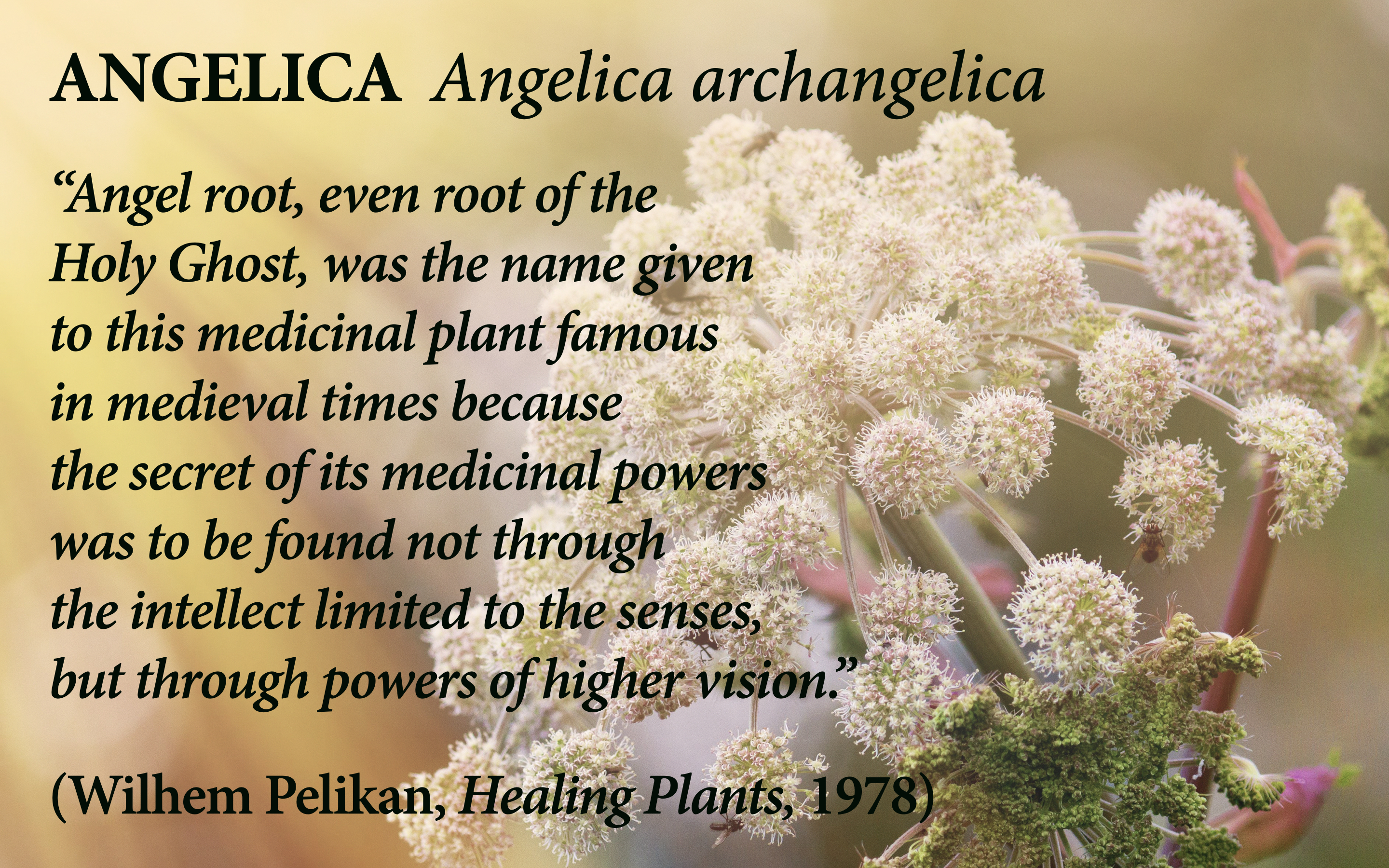
However, in this special course kindly hosted by theNational Association for Holistic Aromatherapy (NAHA), with which I have enjoyed a close relationship since 1998 as both a member and speaker, I will focus rather on those aspects of aromatic plants and their extracts that address and harmonize our profound vital connection with plants and Nature — one that is, and should always be, mutually nurturing ~ and the healing meaning and emotional energy that we can distill from their fragrance, vitality, biology, ethnobotany and symbolic numinosity ~ and above all how to open the heart to your own entirely and uniquely personal elixir (aquaor ‘water of life’) of connection and protection, as symbolized by Angelica.
Pistacia (mastic) Shelter from the storm - 64 Gene Key No. ???
Palo SantoThe chrism of the saints - 64 Gene Key No. 61
Biography
Gabriel Mojay is a practitioner, educator and author in the scientific–Oriental, pharmaco-energetic therapeutics of medicinal and aromatic plants. He has practiced clinical aromatherapy and herbalism, aromatic acupressure and acupuncture since 1987. Gabriel was born in England, grew up near Washington DC, has spent most of his career to date in London, and now lives in California.
Gabriel first studied natural medicine in 1978, initially training in Shiatsu Therapy, and in 1988 he completed four years of training in Traditional Chinese Medicine (TCM) and acupuncture.
While at acupuncture school Gabriel trained in Western and Chinese herbal medicine with Giovanni Maciocia and Michael McIntyre, among others; and in clinical aromatherapy with Pierre Franchomme, Dr Daniel Pénoël MD, Prof. Dietrich Wabner, and Rhiannon Lewis. More recently, he has undertaken advanced training with herbalist-authors including Chanchal Cabrera and Lisa Ganora, in botanical pharmacology and oncology.
Since 1990 Gabriel has been Principal of the Institute of Traditional Herbal Medicine and Aromatherapy (ITHMA), based at Regent’s University London until 2020. In 1990 he also founded an association that in 2002 merged to form the International Federation of Professional Aromatherapists (IFPA) — a UK-registered Charity with some 2000 members in 50 countries. He is a Fellow of IFPA as well as ICAN.
Gabriel has lectured at conferences hosted by the National Association for Holistic Aromatherapy (USA), Alliance of International Aromatherapists (USA), Canadian Alliance of Aromatherapists (CAOA), Canadian Federation of Aromatherapists (CFA), Czech Association of Aromatherapists, New Zealand Register of Holistic Aromatherapists (NZROHA), Botanica, International Herb Symposium (IHS) and the Canadian Herb Conference. He has given seminars in Japan, Korea, China, Hong Kong, Australia, Ireland, Mexico and Brazil.
Gabriel was founding Co-Editor of IFPA’s professional journal, In Essence, and from 2014-2019, Associate Editor of the IJCA. He is co-author of Shiatsu - the Complete Guide and author of Aromatherapy for Healing the Spirit.
You Tube - Gabriel Mojay - Canadian 1 - March 13, 2021
Camphoraceous Fragrance Energy stimulating • invigorating • clearing • energizing Aromatic tone: middle and top notes. Five Element associations: Metal (Fire)